

Guessing which part to swap costs more than the part. Systematic troubleshooting is a method — and it's teachable.
Advanced Electrical Troubleshooting
Hands-on training for maintenance and controls teams — reading wiring diagrams, testing components, and running a systematic method to find faults fast. Real circuits, real injected faults. Delivered on-site or live online.
2
Systematic troubleshooting methods taught, and when each one actually applies
- Wiring diagrams & symbols
- Control circuit troubleshooting
- 3-phase motor diagnostics
- Component-level testing
- Systematic troubleshooting methods
- Power distribution & PM basics
3
Ways every component gets tested — in-circuit, out-of-circuit, and mechanical
Art. 430
NEC motor circuit sizing and protection covered alongside diagnostic skills
NEMA / IEC
Both wiring and numbering systems covered, since most floors run a mix

Everything between "it's broken"
and "found it"
What We Train
Troubleshooting isn't one skill — it's reading a diagram, testing a component correctly, and following a method instead of guessing. We build the session around all three, using your facility's own controls wherever we can.
Wiring diagrams & symbols
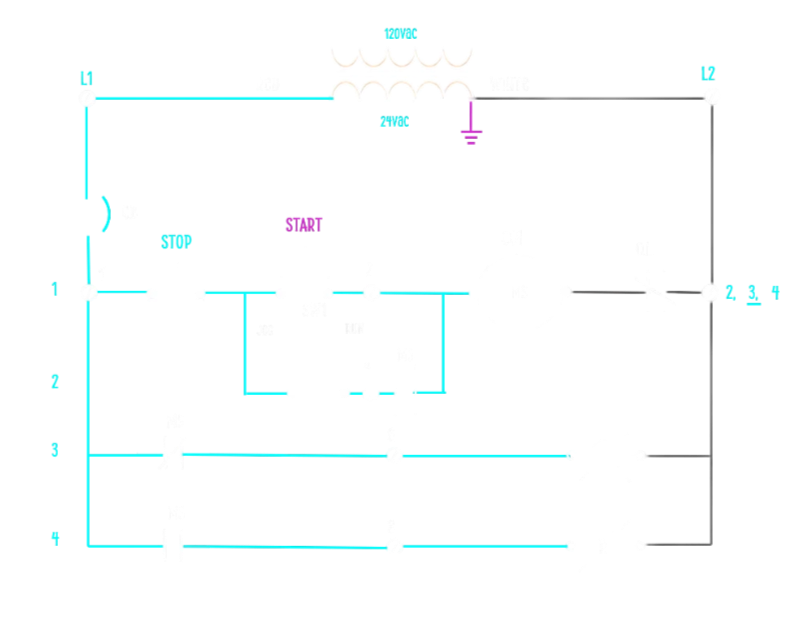
Reading ladder diagrams and tracing current path using both NEMA and IEC symbol conventions.
Control circuit troubleshooting
Start/Stop, Forward/Reverse, jogging, and interlocked circuits — built rung by rung, then diagnosed with real faults.
3-phase motor diagnostics
Single-phasing causes and prevention, proper termination, and ohmmeter/megohmmeter testing.
Component-level testing
In-circuit, out-of-circuit, and mechanical tests on contactors, coils, overload relays, switches, and DC supplies.
Systematic troubleshooting methods
Symptom & Cause, Output-Back, and Half-Split methods — and why the "shotgun" approach usually costs more time, not less.
Power distribution & PM basics
Checking main power ahead of the control circuit, and building troubleshooting into a preventive maintenance routine.

Built for the people who get the call when something stops
WHO SITS IN THE ROOM
This isn't entry-level electrical theory — it's diagnostic skill for people who already work around control circuits and need to get faster and more consistent at finding faults.
The people troubleshooting live faulted circuits with a meter
Hands-on practice with real injected faults, using the same systematic methods experienced techs rely on instead of trial and error.
The people building foundational diagram-reading skill
Learning to trace ladder logic and read both NEMA and IEC symbols before troubleshooting speed becomes realistic.
The people trying to bring down mean time to repair
Standardizing on a systematic method across a team, instead of letting troubleshooting quality depend on who's on shift.
Crews that need one troubleshooting method across sites
The same hands-on curriculum delivered at each facility or live online, so every shift diagnoses faults the same way.

From booking to faster fault-finding in four steps
HOW TRAINING RUNS
Book a date
Tell us your headcount, site, and timeline using the form below.
We scope your equipment
We find out whether your floor runs NEMA, IEC, or a mix, and what controls your team actually works on.
Build, break, and troubleshoot
Trainees wire real circuits, then rotate benches to diagnose faults an instructor has introduced.
Leave with a repeatable method
A documented troubleshooting approach and attendance certificates for your training records.

Get a troubleshooting session on the calendar
BOOK TRAINING
Tell us about your team and equipment, and we'll follow up to confirm a date, format, and quote.
✓ On-site or live online, your choice
✓ NEMA, IEC, or a mix — scoped to your equipment
✓ Hands-on, with real injected faults
✓ Can be paired with NFPA 70E or 70B training same visit